 Weekend Plant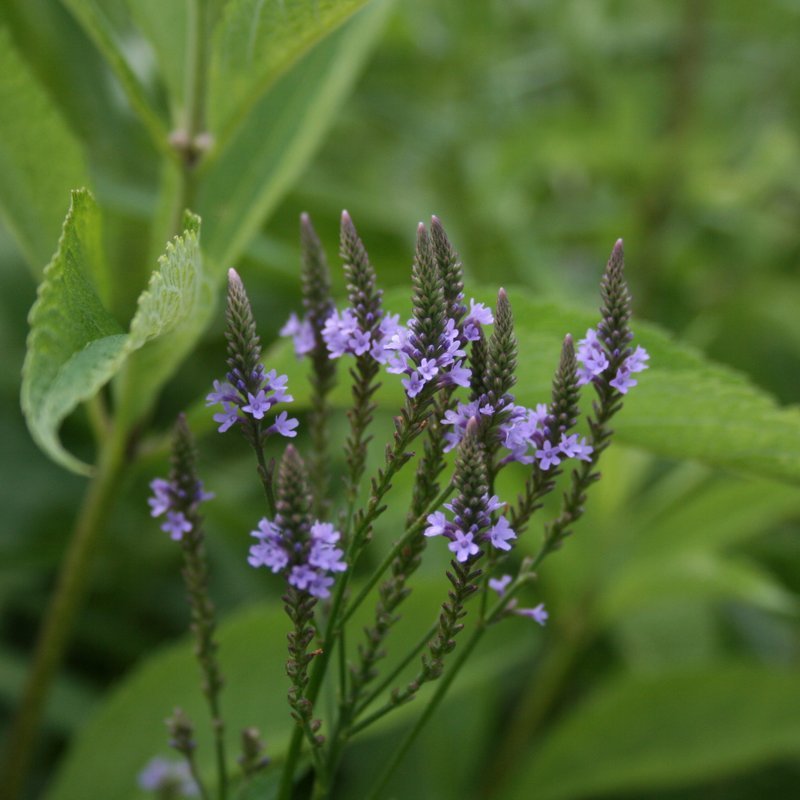
Blue Vervain
Verbena hastata — Verbenaceae
Blue vervain is a tall native wildflower with elegant, upright spikes of small violet-blue blooms that bring a natural meadow look to the garden. It thrives in consistently moist soil and is especially useful for rain gardens, pond edges, and pollinator plantings. Home gardeners value it for its long bloom season, wildlife appeal, and easygoing nature once established.
How to Grow
Planting
Plant blue vervain in spring in a spot with full sun to partial shade and reliably moist soil. It performs especially well in low areas, along streams, in rain gardens, or in borders that do not dry out quickly. Seeds can be sown outdoors in early spring or started after a period of cold stratification to improve germination. Space plants far enough apart to allow airflow, since mature plants grow upright and can form clumps over time.
Care
This is a low-maintenance perennial once established, especially when grown in conditions it naturally prefers. Blue vervain fits well into native plantings and informal cottage gardens, where its tall flower spikes add vertical interest. Mulching around the base helps conserve moisture and suppress weeds during the first growing season. In rich soils, plants may grow taller and occasionally benefit from support if exposed to wind.
Watering
Keep the soil evenly moist, particularly during establishment and in hot summer weather. Although blue vervain tolerates short periods of average garden moisture, it grows best where the ground does not fully dry out. Water deeply rather than lightly to encourage a stronger root system. Plants in rain gardens or naturally damp sites often need little supplemental irrigation once settled in.
Fertilizing
Blue vervain generally does not need heavy feeding and often performs well in average garden soil. A light application of compost in spring is usually enough to support healthy growth and flowering. Avoid overfertilizing, especially with high-nitrogen products, because this can lead to lush foliage and weaker stems with fewer flowers. In native plantings, leaner soil often helps maintain a sturdier habit.
Pruning
Deadheading is optional, but removing spent flower spikes can slightly tidy the plant and may encourage a longer bloom period. If you want the plant to self-seed and naturalize, leave some seed heads in place at the end of the season. Cut stems back in late fall or early spring after the plant has gone dormant. Taller stems can also be pinched lightly in late spring to encourage a somewhat bushier shape, though this may delay flowering a bit.
Common Problems
Powdery mildew
Cause: Poor air circulation, crowding, and humid conditions can encourage this fungal disease on foliage.
Solution: Space plants properly, avoid overhead watering when possible, and remove badly affected leaves to improve airflow.
Root rot
Cause: Although blue vervain likes moisture, stagnant water in compacted or poorly aerated soil can damage roots.
Solution: Grow in moisture-retentive but oxygenated soil, avoid heavily compacted sites, and improve soil structure if drainage is completely stagnant.
Aphids
Cause: Soft new growth can attract clusters of sap-sucking insects, especially in spring and early summer.
Solution: Spray plants with a strong stream of water, encourage beneficial insects, or use insecticidal soap if infestations become severe.
Flopping stems
Cause: Plants may become top-heavy in rich soil, partial shade, or windy locations.
Solution: Grow in fuller sun, avoid excess fertilizer, and stake or surround plants with support if needed.