 Weekend Plant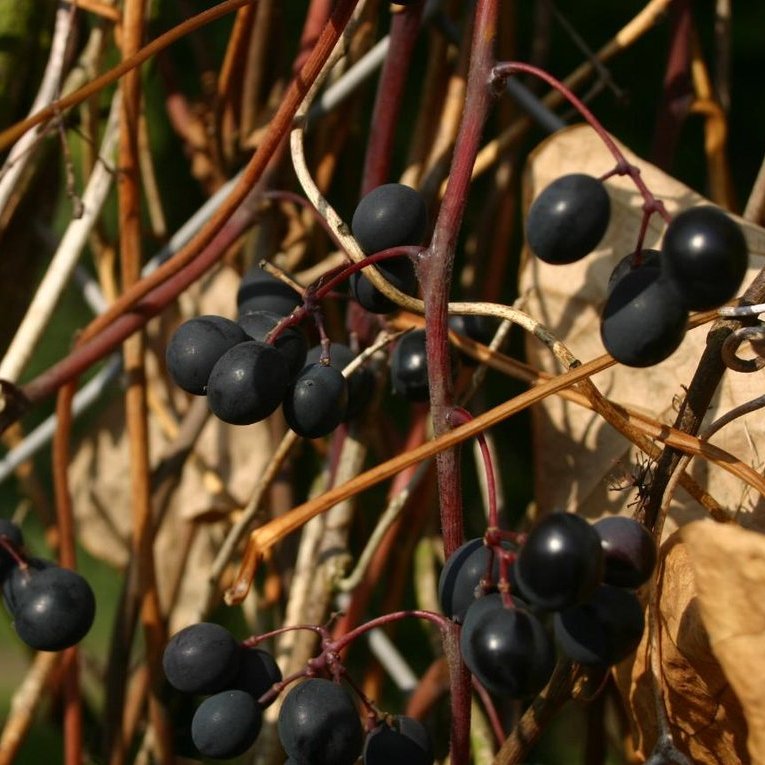
Concord Grape
Vitis labrusca — Vitaceae
Concord grape is a vigorous native American grapevine best known for its richly flavored purple fruit used in fresh eating, juice, jelly, and wine. It grows quickly over arbors, fences, and trellises, making it both productive and ornamental in the home garden. With good sun and annual pruning, this classic grape can provide generous harvests for many years.
How to Grow
Planting
Plant Concord grape in a sunny location with good air circulation and sturdy support such as a trellis, arbor, or fence. Well-drained soil is important, as grapes do not perform well in soggy ground. Set plants 6 to 8 feet apart to give each vine room to develop and to improve airflow around the foliage. The best time to plant dormant vines is in early spring while the weather is still cool.
Care
This vine is vigorous and benefits from training early onto a support system to keep growth organized and fruit accessible. Mulch around the base helps conserve moisture and suppress weeds, but keep mulch a few inches away from the trunk to prevent rot. Good sunlight is essential for sweet fruit and strong growth. Thin overcrowded shoots during the growing season if needed to improve airflow and reduce disease pressure.
Watering
Water newly planted vines regularly during their first growing season so roots can establish deeply. Once established, Concord grapes are fairly resilient but still produce best with consistent moisture during flowering and fruit development. Deep watering is better than frequent shallow watering, especially during dry spells. Avoid constantly wet soil, which can encourage root problems and fungal disease.
Fertilizing
Grapes usually need only modest feeding, especially if planted in reasonably fertile soil. In early spring, apply a balanced fertilizer or compost around the root zone to support new growth. Avoid overfertilizing with high-nitrogen products, as this can lead to excessive leafy growth at the expense of fruit production. A soil test is the best guide if vines seem weak or yields are poor.
Pruning
Annual pruning is essential because grapes fruit on new shoots that grow from one-year-old wood. Prune during late winter while the vine is dormant, removing most of the previous season's growth and keeping a well-spaced framework of canes or spurs. Summer pruning can also help control excessive growth and improve sunlight penetration to the fruit. Without regular pruning, vines become tangled and less productive over time.
Harvesting
When to Harvest
Harvest Concord grapes from late summer into early fall, when clusters are fully colored, fragrant, and sweet. Unlike some fruits, grapes do not continue to ripen after picking, so taste-testing is the best way to judge readiness.
How to Harvest
Use clean pruners or scissors to cut whole clusters from the vine rather than pulling berries off by hand. Handle the fruit gently to avoid bruising and harvest in the cool part of the day when possible.
Storage
Store unwashed grape clusters in the refrigerator in a breathable container or bag. They are best used within one to two weeks for fresh eating, juice, jelly, or freezing. Wash just before use to help preserve quality.
Common Problems
Powdery mildew
Cause: Fungal disease encouraged by poor airflow, shade, and humid conditions.
Solution: Plant in full sun, prune regularly to open the canopy, and remove badly affected leaves. Use an appropriate fungicide if the problem becomes severe.
Black rot
Cause: A fungal disease that spreads in warm, wet weather and overwinters on infected plant debris.
Solution: Remove mummified fruit and fallen leaves, prune for better airflow, and apply preventive fungicide sprays when needed.
Japanese beetles
Cause: Adult beetles feed on grape leaves, skeletonizing the foliage.
Solution: Hand-pick beetles in the morning, use row covers on small plants if practical, and reduce nearby beetle habitat. In severe cases, use labeled controls.
Bird damage
Cause: Birds are attracted to ripening grape clusters and can strip vines quickly.
Solution: Cover vines or fruiting sections with bird netting as grapes begin to color.
Downy mildew
Cause: Fungal-like disease favored by wet foliage and damp weather.
Solution: Water at the base of the plant, improve spacing and pruning for airflow, and remove infected foliage promptly.