 Weekend Plant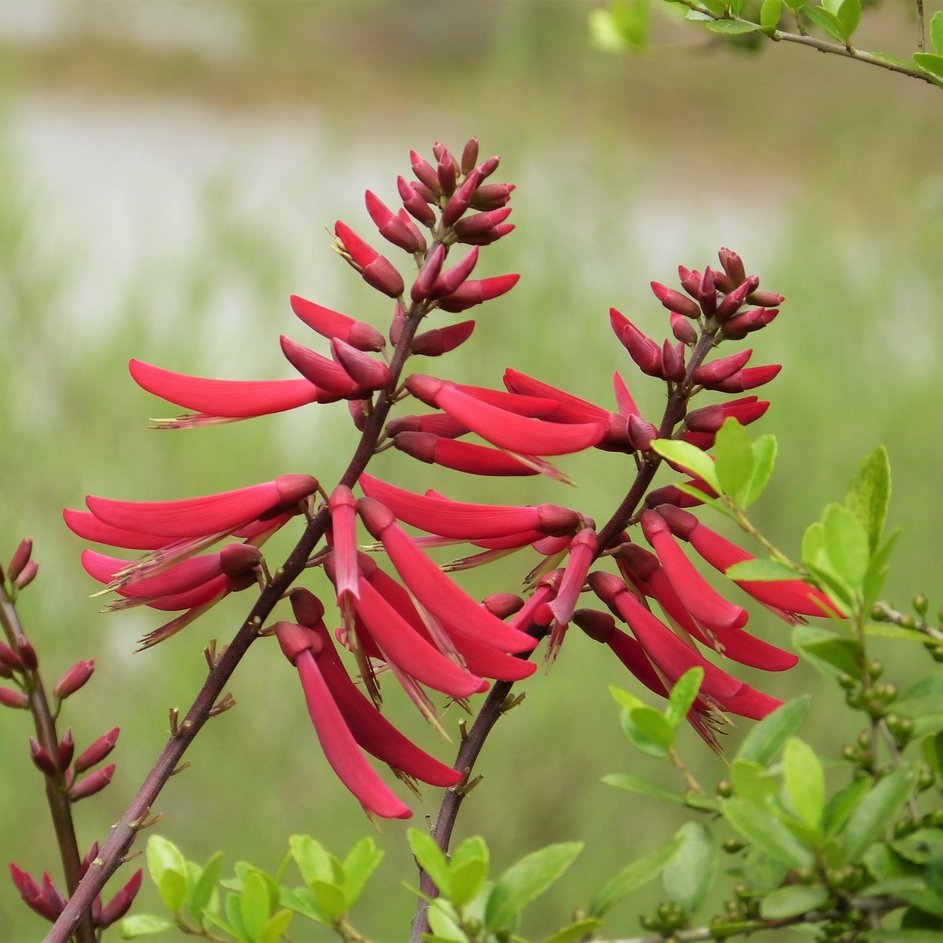
Coral Bean
Erythrina herbacea — Fabaceae
Coral bean is a striking native shrub or herbaceous subshrub grown for its vivid red, tubular flowers and bold tropical look. It attracts hummingbirds and adds bright seasonal color to warm-climate gardens with relatively little care. In colder parts of its range, it may die back to the ground in winter and return from the roots in spring.
How to Grow
Planting
Plant coral bean in a warm, sunny to lightly shaded location with well-drained soil. It performs best where winters are mild, though it can regrow from the base after cold damage in the lower end of its hardiness range. Space plants generously to allow for their upright, somewhat open habit and to improve air circulation. If starting from seed, scarify the hard seed coat and soak seeds before sowing to improve germination.
Care
This plant is easy to grow once established and is especially useful in native, wildlife, and low-water gardens. Coral bean benefits from a protected site in areas with occasional frost, as top growth can be damaged by cold. A layer of mulch around the root zone helps conserve moisture and insulate roots, but keep mulch away from the crown. Handle the plant carefully, as stems may have prickles and the seeds are toxic if ingested.
Watering
Water regularly during the first growing season to help the plant establish a strong root system. After establishment, coral bean is fairly drought tolerant and usually needs only occasional deep watering during extended dry spells. Avoid constantly wet soil, which can lead to root problems and poor performance. Container-grown plants will need more frequent watering than those in the ground.
Fertilizing
Coral bean generally does not need heavy feeding and often performs well in average garden soil. Too much fertilizer, especially high-nitrogen products, can encourage leafy growth at the expense of flowers. If growth seems weak in poor soil, apply a light dose of a balanced, slow-release fertilizer in spring. In many gardens, compost worked into the soil is enough to support healthy growth.
Pruning
Prune in late winter or early spring to remove any cold-damaged, dead, or weak stems before new growth begins. In frost-free areas, light shaping after flowering can help maintain a tidy form. In colder regions where the top dies back, simply cut stems to the ground once they are clearly dead. Wear gloves when pruning because stems can be spiny.
Common Problems
Root rot
Cause: Poorly drained soil or excessive watering keeps roots too wet.
Solution: Plant in well-drained soil, avoid overwatering, and improve drainage with raised beds or soil amendments if needed.
Cold damage
Cause: Freezing temperatures can kill back stems, especially near the edge of its hardiness range.
Solution: Mulch around the base in fall, plant in a sheltered spot, and prune away damaged growth in spring after new shoots appear.
Leaf spot
Cause: Fungal diseases may develop in humid conditions or where air circulation is poor.
Solution: Space plants properly, water at the base rather than overhead, and remove heavily affected foliage.
Caterpillars
Cause: Leaf-feeding larvae may occasionally chew foliage.
Solution: Inspect plants regularly and handpick pests when practical, or use a targeted biological control if damage becomes severe.