 Weekend Plant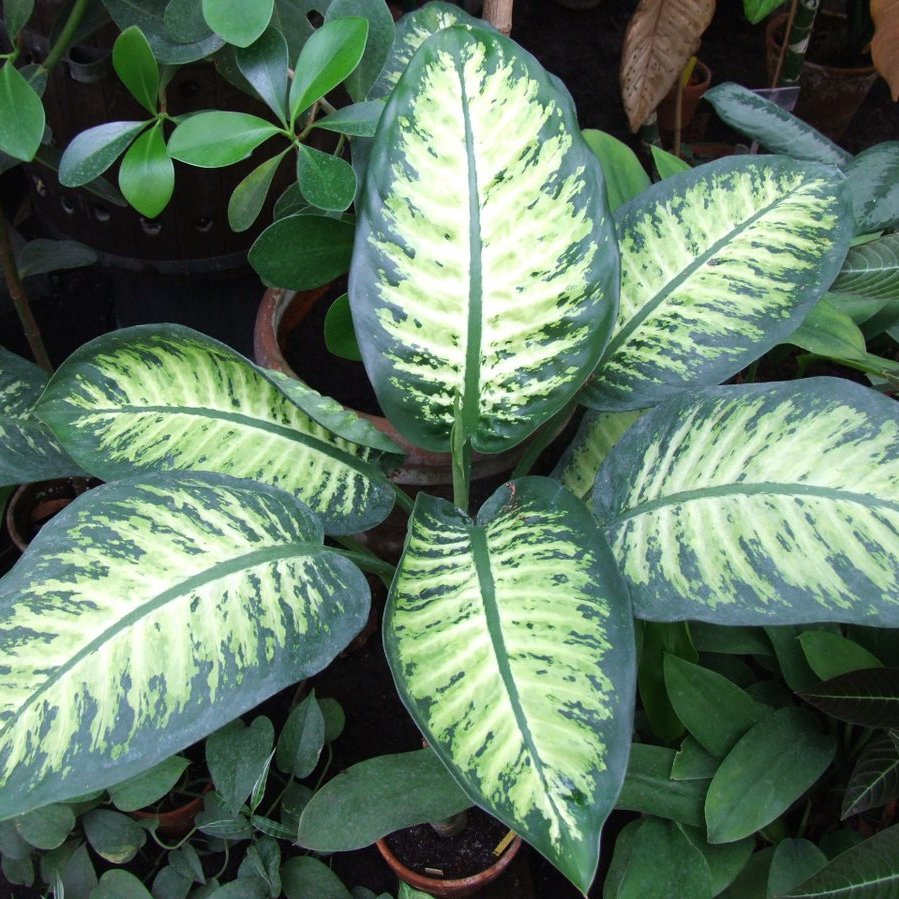
Dumb Cane
Dieffenbachia seguine — Araceae
Dumb cane is a bold tropical foliage plant grown for its large, patterned leaves that brighten indoor spaces and shaded gardens in warm climates. It is especially popular as a beginner-friendly houseplant because it tolerates average indoor conditions and adds a lush, tropical look. All parts of the plant are toxic if chewed, so place it carefully away from pets and children.
How to Grow
Planting
Plant dumb cane in a container with drainage holes using a loose, rich potting mix that drains well but still holds some moisture. It grows best in bright, indirect light, though it can tolerate lower light indoors at the cost of slower growth and less vivid leaf patterning. Outdoors in frost-free climates, place it in a sheltered spot with filtered light or morning sun and afternoon shade. Repot when roots begin circling the pot or when the plant becomes top-heavy.
Care
This plant prefers warm temperatures, steady humidity, and protection from cold drafts or sudden temperature swings. Ideal indoor temperatures are generally between 65 and 85°F, and growth may slow if conditions become cool. Wipe dust from the leaves occasionally so the plant can photosynthesize efficiently and maintain its attractive appearance. Because the sap can irritate skin and mouth tissues, wear gloves when handling or pruning.
Watering
Water when the top 1 to 2 inches of soil feel dry to the touch, then water thoroughly until excess drains away. Dumb cane likes evenly moist soil but does not tolerate sitting in soggy conditions, which can quickly lead to root problems. Reduce watering in winter when growth slows, especially in lower light. If leaf tips brown, check for inconsistent watering, dry air, or mineral buildup from tap water.
Fertilizing
Feed during active growth in spring and summer with a balanced liquid houseplant fertilizer diluted to half strength every 4 to 6 weeks. Avoid overfertilizing, which can cause weak, overly soft growth or salt buildup in the soil. If the plant is in lower light, fertilize less often because it will use nutrients more slowly. Flushing the pot with plain water occasionally can help remove excess salts.
Pruning
Remove yellowing, damaged, or aging leaves at the base to keep the plant tidy and direct energy into healthy growth. If the plant becomes leggy, you can cut back the cane to encourage new shoots from lower nodes. Stem sections can often be rooted and used for propagation, making pruning a good way to refresh an older plant. Always clean tools before cutting and handle the plant carefully because of its irritating sap.
Common Problems
Yellowing leaves
Cause: Overwatering, poor drainage, or natural aging of older lower leaves.
Solution: Allow the top layer of soil to dry slightly before watering again, make sure the pot drains well, and remove only the oldest yellow leaves if the rest of the plant looks healthy.
Brown leaf tips
Cause: Low humidity, inconsistent watering, or salt buildup from fertilizer or tap water.
Solution: Increase humidity, water more consistently, and flush the soil occasionally to remove excess salts.
Root rot
Cause: Soil staying wet too long, especially in low light or containers without adequate drainage.
Solution: Repot into fresh, well-drained mix, trim away rotten roots, and adjust watering so the soil is moist but never waterlogged.
Spider mites
Cause: Dry indoor air and stressed plants.
Solution: Raise humidity, rinse the foliage, and treat with insecticidal soap or neem oil if needed.
Mealybugs
Cause: Common indoor pest infestations, especially on crowded or dusty plants.
Solution: Isolate the plant, wipe pests off with alcohol on a cotton swab, and repeat treatment with insecticidal soap as necessary.