 Weekend Plant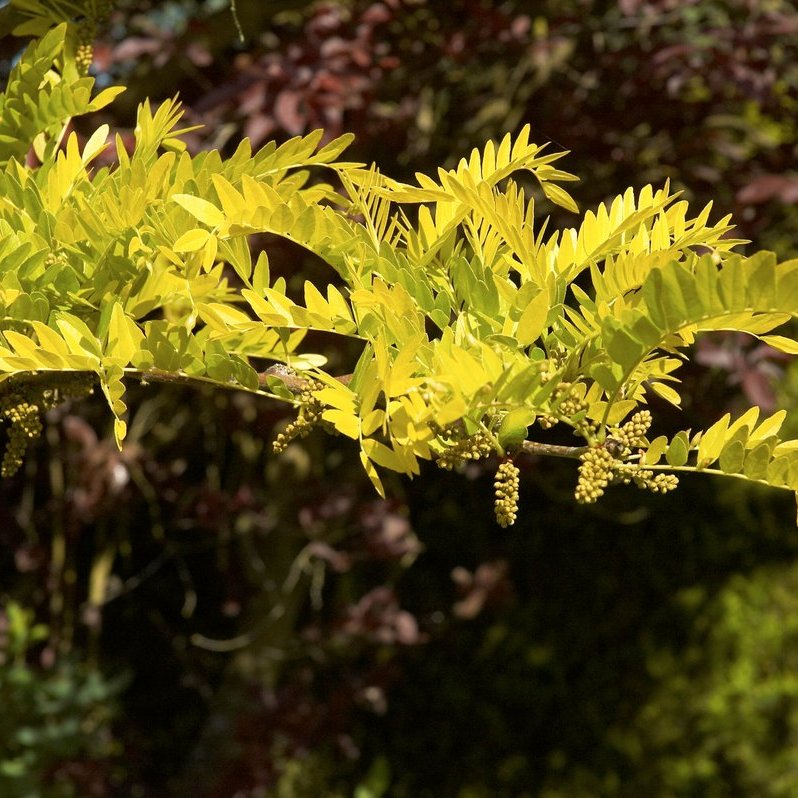
Honey Locust
Gleditsia triacanthos — Fabaceae
Honey locust is a fast-growing deciduous shade tree valued for its airy canopy, fine-textured foliage, and adaptability to tough growing conditions. It is widely planted in landscapes because it tolerates heat, drought, and urban stress better than many other large trees. Thornless selections are especially popular for home gardens, while the species is also known for its long seed pods and rugged character.
Growing data sourced from the USDA PLANTS Database. Hardiness zones reflect perennial survival — this plant may tolerate a wider range when grown as an annual.
How to Grow
Planting
Plant honey locust in a site with full sun, as it is shade intolerant and develops its best shape and strongest growth in open exposure. It adapts to a range of soils, especially medium and fine-textured soils, and handles both slightly acidic and moderately alkaline conditions. Choose a location with enough room for its mature height and broad rounded canopy, keeping it well away from foundations or narrow planting strips unless using a selected cultivar. Young trees establish best when planted in spring while the soil is workable and temperatures are mild.
Care
This tree is generally easy to grow once established and is prized for its toughness in landscapes. It has moderate fertility needs, so average garden soil is usually sufficient without intensive amendment. Honey locust performs well in windy, hot, and exposed sites and is often used for shade and shelter planting. Thornless cultivars are the best choice for residential yards, since wild-type trees may produce large thorns and abundant pods.
Watering
Water regularly during the first one to two growing seasons to help the root system establish deeply. Once established, honey locust has high drought tolerance, though it grows faster and looks better with occasional deep watering during prolonged dry spells. Avoid constantly soggy or poorly drained sites, as it has no anaerobic tolerance and does not perform well in waterlogged soil. A layer of mulch around the root zone helps conserve moisture and moderate soil temperature.
Fertilizing
Honey locust usually needs little supplemental fertilizer in average soils. If growth is weak or foliage appears pale, apply a balanced slow-release tree fertilizer in early spring according to label directions. Avoid overfertilizing, which can encourage overly soft, fast growth that is more vulnerable to breakage and pests. In many home landscapes, compost used as a light topdressing is enough to support healthy growth.
Pruning
Prune in late winter or very early spring to shape young trees and develop a strong central structure. Remove dead, damaged, crossing, or poorly attached branches while the tree is dormant. Thornless landscape forms may still produce occasional thorny shoots, which should be removed promptly. Mature trees usually need only periodic maintenance pruning to keep the canopy safe and balanced.
Common Problems
Cankers
Cause: Fungal pathogens often enter through wounds, drought stress, or winter injury.
Solution: Prune out affected branches during dry weather, disinfect tools, and keep the tree healthy with proper watering and mulching.
Webworms and caterpillars
Cause: Leaf-feeding insects can defoliate portions of the canopy during the growing season.
Solution: Remove small nests by hand when practical, encourage beneficial insects and birds, and use Bt products on young larvae if infestations are severe.
Mimosa webworm
Cause: This insect feeds on foliage, causing browning and webbed leaves, especially in warm regions.
Solution: Prune out heavily infested growth when possible and treat early infestations with appropriate insect controls if damage becomes significant.
Leaf spot
Cause: Fungal leaf diseases are more common in humid weather or crowded plantings with poor airflow.
Solution: Rake and dispose of fallen leaves, avoid overhead watering, and prune to improve air circulation.
Thorns and seed pod litter
Cause: Wild-type trees naturally produce large branched thorns and abundant pods that can create maintenance issues.
Solution: Plant thornless, low-pod cultivars for home landscapes and remove volunteer seedlings promptly.