 Weekend Plant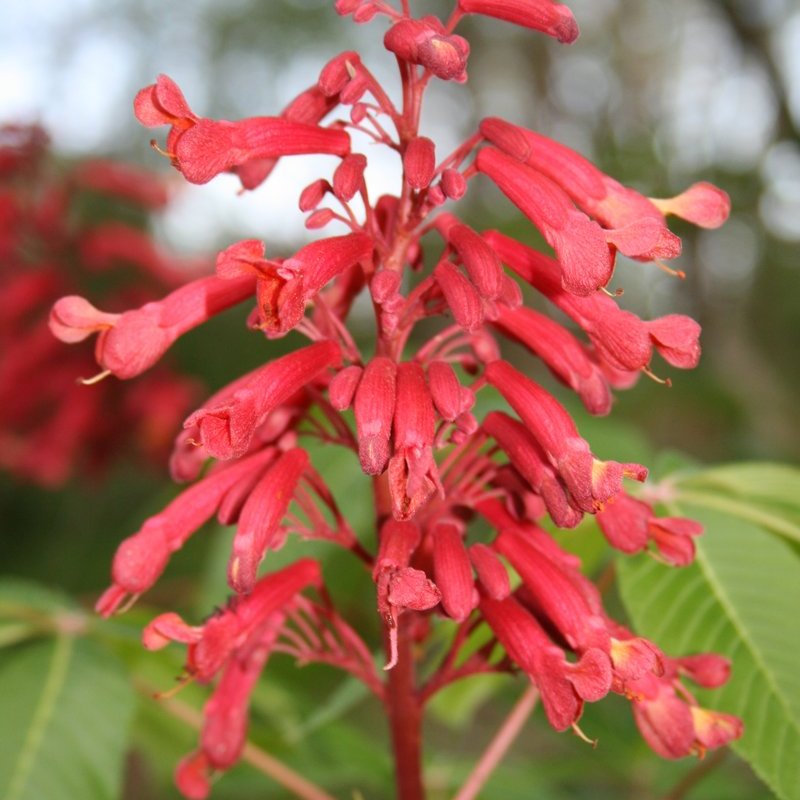
Red Buckeye
Aesculus pavia — Sapindaceae
Red buckeye is a small native tree prized for its bold red spring flowers and tidy, rounded form. It is especially valuable in wildlife-friendly landscapes, where its nectar-rich blooms attract hummingbirds and early pollinators. This ornamental species performs best in moist soils and can handle more shade than many flowering trees.
This plant has severe toxicity. Keep away from children and pets.
Growing data sourced from the USDA PLANTS Database. Hardiness zones reflect perennial survival — this plant may tolerate a wider range when grown as an annual.
How to Grow
Planting
Plant red buckeye in spring or fall in a location with full sun to partial shade. It adapts to coarse, medium, or fine soils, but it grows best where the soil stays evenly moist and drains reasonably well. Choose a site with room for its mature spread and avoid placing it where fallen seeds or leaves may be accessed by pets or livestock, since the plant is highly toxic. Young trees establish best when planted at the same depth they were growing in the nursery container.
Care
This is a relatively low-maintenance native tree once established, especially in woodland-edge or naturalistic plantings. It benefits from mulch around the root zone to keep soil cool and conserve moisture, but keep mulch a few inches away from the trunk. Because it is long-lived and naturally upright, it usually needs little structural intervention beyond occasional shaping. Expect deciduous foliage and a flush of active growth mainly in spring and summer.
Watering
Red buckeye has low drought tolerance and high moisture use, so regular watering is important, especially during establishment and in dry weather. Keep the soil consistently moist but not constantly waterlogged. Deep watering once or twice a week is usually better than frequent shallow watering, depending on rainfall and soil type. Extra attention is most important during hot summers and for newly planted trees.
Fertilizing
This tree generally does not need heavy feeding, especially if planted in reasonably fertile garden soil. A light application of compost or a balanced slow-release fertilizer in early spring is usually enough where growth seems weak. Avoid overfertilizing, which can encourage excessive soft growth at the expense of flowers and overall health. Medium fertility is sufficient for good performance.
Pruning
Prune red buckeye in late winter or just after flowering to remove dead, damaged, or crossing branches. Minimal pruning is usually needed because the tree naturally forms a pleasing shape. If training a young tree to a strong single trunk, make small corrective cuts early rather than major cuts later. Always wear gloves and wash up after handling seeds or plant parts because of the plant's toxicity.
Common Problems
Leaf scorch
Cause: Hot sun, drought stress, or drying winds can cause leaf edges to brown, especially in exposed sites.
Solution: Provide consistent moisture, mulch the root zone, and plant where the tree gets afternoon shade in hotter areas.
Powdery mildew
Cause: Humid conditions and poor air circulation can encourage fungal growth on leaves.
Solution: Space plants properly, avoid overhead watering when possible, and remove badly affected fallen leaves.
Leaf blotch or leaf spot
Cause: Fungal leaf diseases are more common during wet weather or where foliage stays damp for long periods.
Solution: Rake up and dispose of infected leaves, improve airflow, and water at the base of the plant.
Scale insects
Cause: Sap-feeding insects may attach to stems and branches, weakening the plant over time.
Solution: Inspect branches regularly and treat infestations with horticultural oil during the appropriate season.
Root stress
Cause: Extended drought or poorly managed planting sites can stress roots and reduce vigor.
Solution: Maintain even soil moisture, apply mulch, and avoid disturbing the root zone.