 Weekend Plant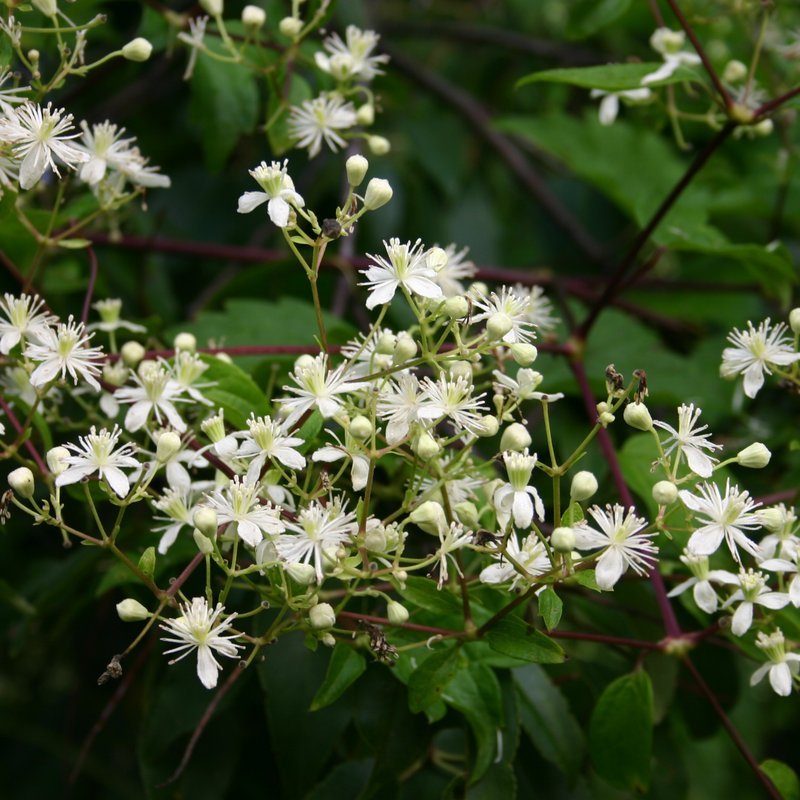
Virgin's-bower
Clematis virginiana — Ranunculaceae
Virgin's-bower is a vigorous native perennial vine grown for its masses of fragrant white flowers in summer and its attractive feathery seed heads later in the season. It is a great choice for naturalized plantings, fences, arbors, and wildlife gardens where it can scramble and climb with a soft, romantic look. This clematis is beginner-friendly when given support, decent moisture, and room to grow.
Growing data sourced from the USDA PLANTS Database. Hardiness zones reflect perennial survival — this plant may tolerate a wider range when grown as an annual.
How to Grow
Planting
Plant virgin's-bower in spring or fall in a spot with support such as a trellis, fence, or shrub to climb through. It grows best in medium to fine-textured soils with slightly acidic to near-neutral pH, matching its USDA range of about 4.9 to 6.8. Choose a site in full sun to partial shade; flowering is usually heaviest with more sun, while partial shade helps in hotter areas. Space plants far enough apart for airflow and future spread, and mulch around the root zone after planting.
Care
This is a long-lived perennial vine that becomes more impressive as it settles in. Guide young stems onto their support early, since the plant climbs by twining leaf stalks and benefits from a little direction at first. It fits well in native, woodland-edge, and informal gardens, but its vigorous habit means it should be given room and watched so it does not overwhelm nearby small plants. A layer of mulch helps keep roots cool, reduces weed competition, and supports steady growth through spring and summer.
Watering
Virgin's-bower has medium moisture needs and appreciates evenly moist soil while establishing. Water deeply once or twice a week during dry spells in the first growing season, adjusting for rainfall and soil type. Once established, it shows moderate drought tolerance, but flowering and foliage quality are best when the soil does not stay dry for long periods. Avoid waterlogged conditions, since it does not tolerate anaerobic soils well.
Fertilizing
This vine has a medium fertility requirement and usually performs well in average garden soil enriched with compost. Mix organic matter into the planting area before planting, then top-dress annually in spring with compost or a balanced slow-release fertilizer. Avoid overfeeding with high-nitrogen products, which can encourage excessive leafy growth at the expense of flowers. If growth seems weak in poor soil, a light feeding in early spring is usually enough.
Pruning
Prune in late winter or early spring before vigorous new growth begins. Since it flowers on current season's growth, you can cut it back to shape, remove dead or tangled stems, and reduce its size without sacrificing the summer display. During the growing season, trim stray shoots if needed to keep the vine within bounds. Regular thinning also improves airflow and helps reduce disease pressure.
Common Problems
Powdery mildew
Cause: Humid weather, poor air circulation, and crowded growth can encourage this fungal disease on foliage.
Solution: Space plants properly, prune to improve airflow, and avoid overhead watering when possible. Remove badly affected leaves and keep the area around the vine clean.
Leaf spot
Cause: Fungal pathogens are more common in wet conditions and on dense, shaded growth.
Solution: Water at the base of the plant, remove infected foliage, and prune for better light and air movement. Dispose of fallen leaves rather than composting diseased material.
Aphids
Cause: Soft new growth in spring and early summer can attract sap-sucking insects.
Solution: Wash them off with a strong spray of water or treat with insecticidal soap if populations build up. Encourage beneficial insects such as ladybugs and lacewings.
Slugs and snails
Cause: Young shoots are vulnerable in damp, mulched, or shady sites.
Solution: Hand-pick at dusk, use barriers or traps, and reduce hiding places near the crown. Protect tender new growth early in the season.
Clematis wilt or stem collapse
Cause: Sudden stem damage can result from fungal infection, injury, or stress at the base of the plant.
Solution: Cut affected stems back to healthy tissue, keep the plant evenly watered, and mulch to protect the root zone. Healthy roots often send up new shoots after damaged stems are removed.